
Subscribe and receive email notifications of new blog posts.
 RSS Feed
- 2026 | 30 Posts
- 2025 | 48 Posts
- 2024 | 48 Posts
- 2023 | 48 Posts
- 2022 | 48 Posts
- 2021 | 48 Posts
- 2020 | 44 Posts
- 2019 | 48 Posts
- 2018 | 48 Posts
- 2017 | 2 Posts
- 2014 | 1 Posts
25
Why Homeowners Should Consider Composting
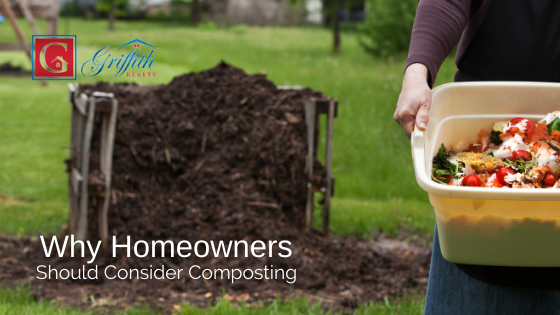
If you want to reduce the amount of waste you send to the landfill and help your plants grow, composting will help you achieve both these goals. Composting is the process of recycling organic material into fertilizer.
To start composting, dedicate a shady space near a water source as your compost pile. Then, add green waste (like vegetable and fruit scraps, grass clippings, and coffee grounds) and brown waste (such as branches and dead leaves).
Try to keep your amount of brown waste and green waste equal. Add water as you add waste to the pile, and keep everything moist. It takes anywhere from a couple of months to a year or two to create compost. Another option is to use an indoor composting bin; this will produce compost within a few months.
Our real estate agents know that it's possible to start composting whether you live on a large lot or in a cozy apartment; spatial limitations won't remove your ability to compost. Check out some of the benefits associated with composting.
- Composting Lowers the Amount of Food Waste
The average family of four throws away $150 worth of food each month. Instead, use your uneaten food to enrich your soil with nutrients and lower the incidence of pests and plant diseases. When it's time to tend your garden, you can use your compost material instead of purchasing expensive store-bought fertilizer. In addition to minimizing the financial implications of food waste, composting makes it possible for your family to send fewer pounds of waste to the landfill. Even though organic material is degradable, it still requires space and releases greenhouse gases.
- Composting Enriches Your Soil
If you're concerned that your garden is struggling due to poor soil health, composting will strengthen your soil and add valuable nutrients. Since compost consists of organic matter, it will add this matter to your soil. You'll find that your soil can retain moisture better and is less likely to erode. Your plants will grow better because their soil will have a better structure.
- Composting Reduces Your Dependance on Storebought Products
Since compost has a lot of nutrients, it's reasonable to assume that you'll be able to significantly reduce or eliminate the storebought nutrients you have to add to your soil. However, because better soil health equates to healthier plants, you'll also be able to lower or eliminate the number of commercial pesticides that you use. Hardy plants are more resilient to insects, fungi, and disease. Compost releases nutrients to your soil over time, so your garden will receive a consistent source of nourishment.
- Composting is Beneficial for the Ecosystem
The improved soil quality attributed to compost material isn't just beneficial for your plants; it also creates an ideal habitat for the organisms that live in the soil. These organisms break down the soil and produce a hospitable environment for plants, insects, and other organisms.
Looking for a home with more space for your garden? Contact us today to check out your options!